https://www.instagram.com/tv/CTxb84UI_6n/?utm_source=ig_web_button_share_sheet
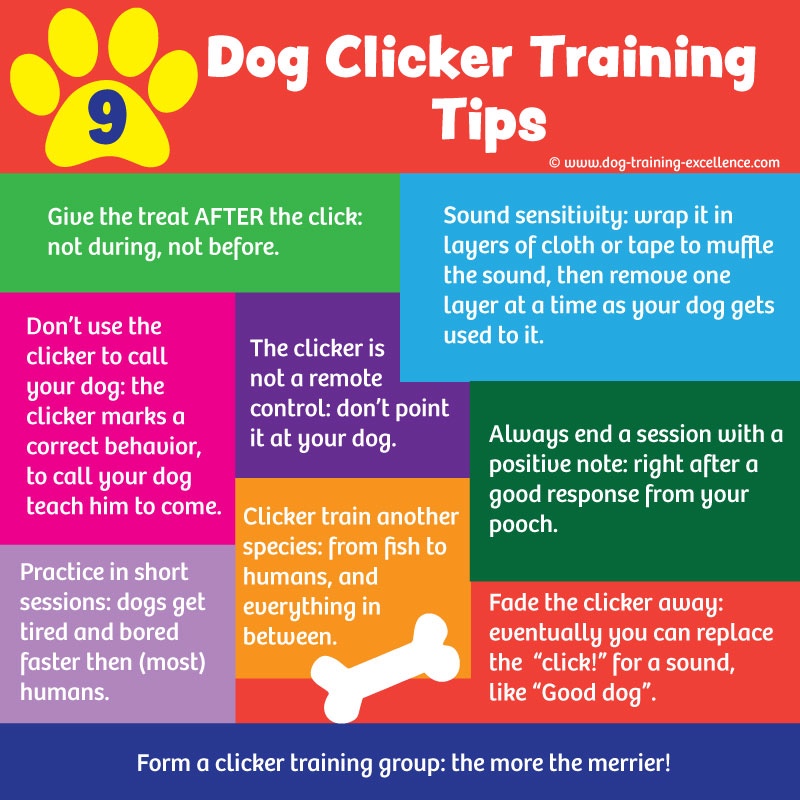
“A marker sound is a sound that has been paired with something the dog likes, such as food, enough times that the dog understands that when he hears the sound, it means food is coming.”
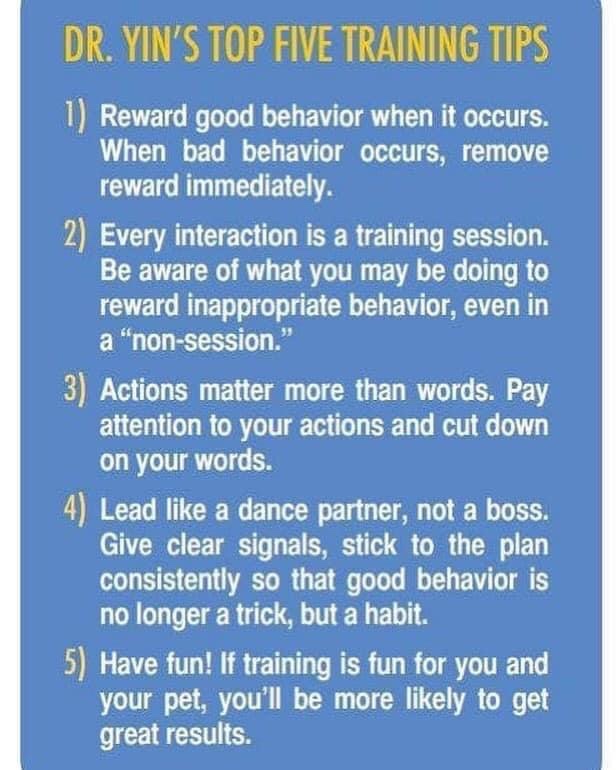
Dr. Sophia Yin, DVM, MS, (1966-2014)
Dog to dog interactions
🐕As a dog owner, you and your dog are going to encounter many other dogs on your walks. The question is, how do you prevent and protect your dog from another dog’s reactivity?
🤔Most people think that their dog is ok and friendly, maybe a little over-eager at times, but still a social dog. However, they don’t know or often observe or understand their dog’s body language.
🐾Dog’s mainly communicate using facial expressions and body posturing. If you can understand body language, or at least the basics of it, you most likely can prevent a situation that can be potentially harmful to your dog.
👃Sniffing is a huge part of the dog’s greeting process. The other dog’s anal glands, pheromones, and other scents give the dog all the information they want to know about their potentially new canine friend.
👍If the greeting is going well for both dogs you will notice that they will both appear to be relaxed. However, if the greeting is not going well you will notice that one, or both show tension in their body.
The tail may be held high, wagging in stiff short movements, or it may be low, tuck between the dog’s legs. It is also not a good sign if the dogs stand rigid and intensely stare at one another (this can happen very briefly before breaking out into a scrap).
The reason why leash greetings may go wrong is that:
- On-leash greetings can be clumsy
- The leash causes restrictions of movement
- The lead restricts the dog’s ability to escape
- The dog can go through conflicting emotions – He wants to greet the other dog, but he is not sure or comfortable.
- You have a higher chance of greetings going well if the dogs do not feel trapped.
💡Tips to avoid reactive leash greetings:
- Do not allow your dog to make a ‘bee line’ to another dog or let your dog rush towards another dog. That kind of behaviour may be incredibly overwhelming and frightening to the other dog which may cause fear reactivity.
*Be proactive about the situation. If another dog approaches your dog in that manner, then gently call your dog in a happy voice and say, ‘come on, let’s go this way’. This is taking your dog out of a situation that could potentially put your dog in harm BEFORE it may happen.
*If your dog does meet another dog, try using the 2-3 second rule. This is the amount of time the initial greeting should last. At any point, if you see either one of the dogs are not comfortable or one of them starts to growl or bark, immediately walk away calling your dog happily.
*Moving may help reduce the intensity of the greeting. Once you get to 3, call your dog away from the other dog, praise your dog, and give it another couple of seconds which helps your dog disengage. Then reintroduce them again applying the same tip from above.
- Do not put your dog in a position where he/ she has no way out by forcing your dog to turn in a position for the other dog to greet.
- DO NOT have a tight leash.
You ideally are aiming for a relaxed posture from both dogs Their body language will be ‘loose’, their jaws will be relaxed and not closed tight. Their tails will be gently wagging in circular motions.
It is good to practice the three-second rule with all dogs. Even with the dogs your dog already knows.
🧐Now, this would obviously be a different situation if your dog is approached by another dog who is off the lead. My advice would be to try and manage the areas you walk in as much as possible. This means avoid places where you think this situation may happen, and if it does, then try and take your dog away from the dog off lead as quickly as possible in a calm manner.
1)Stopping puppy nipping
2)Stopping a dog from getting on furniture
3) Stopping a dog from being leash reactive and lunging
4) Stopping a dog from counter surfing
5) Stopping a dog from going to the bathroom in the house
6) Stopping a dog from jumping on people
7)Stopping a dog from bolting out the door
These examples are not “training behavior”, they are “inhibition”. Do not confuse the two
https://susangarrettdogagility.com/2019/04/train-my-dog-to-come-when-called/?utm_source=facebook-page&utm_medium=share&utm_term=blog-coming-when-called&utm_content=&utm_campaign=awareness-dog-training
I feed twice a day, but not on days i will train . Except for pups up to about 3 months, they get twice a day. Unless I have a dog who’s food drive is so insane they can’t think straight when training, they may get breakfast LOL
Currently I am feeding Diamond Lamb and Lentil and training treats and raw knuckle bones . I tend to change their kibble every year or two, they have eaten various formulas from Diamond, Taste of the Wild, Victor, CostCo, 4Health (TSC), Canidae, Inukshuk and other brands I can’t think of off hand. I also feed raw on a regular basis, I would say my dogs diet is probably 70/30 kibble/raw. Anything from chicken quarters or other single parts (heart, kidney, muscle meat, etc) to whole animals (rabbit, chickens, etc). They also get fruits and veggies on a regular basis as random treats.
- Interactions with your dog are the relationship.
- How I get the training done before I do the training.
- keep dog treats and toys in small bowls around my home.
- be ready to reward your dog for doing something well.
- capture behaviours that I want my dogs to do.
- opportunities for my dogs to earn reinforcement at mealtimes.
- I am intentional about catching my dogs doing something well.
- being aware of the thing before the thing.
- decide what your rules are for your dog.
- walks for training opportunities.
- be present to what your dog is rehearsing.
- 75% of my puppy training happens when I’m not training.
- 95% of my adult dog training happens when I’m not training.
Game 1: Establish for the puppy that training is fun!
Game 2: Teach the “I LOVE my name!” game, and then introduce a word so your puppy knows when he can look for a cookie on the floor.
Game 3: We’re moving on to “I LOVE this place!” so your puppy is comfortable and confident in an ex-pen.
Game 4: Puppy learns “now I can move!” and to wait.
Game 5: Having “Four on the Floor” means good things happen, and puppy discovers that Good Choices = Good Consequences!
Dog training is like negotiating; the first one to get upset loses the negotiation.
Multiple Repetitions Short Duration
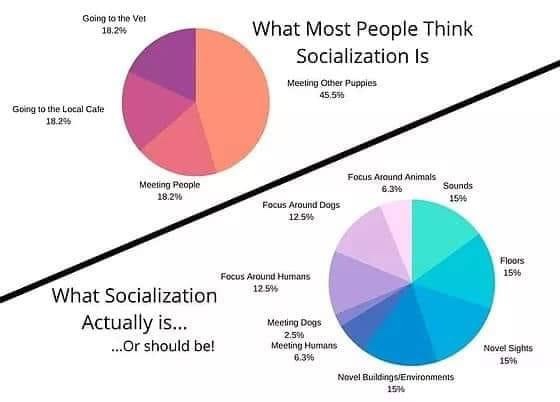
Don’t be in a rush to allow other people or dogs to socialise with your dog.

5️⃣Tips for Training
- Educate him in a simple and fun way. Puppies have a shorter attention span, don’t panic, it’s normal. Keep that in mind to make this process easier.
- Be patient and determined. By having a very short attention span, puppies become distracted and distracted, which is why patience and a lot of love are needed.
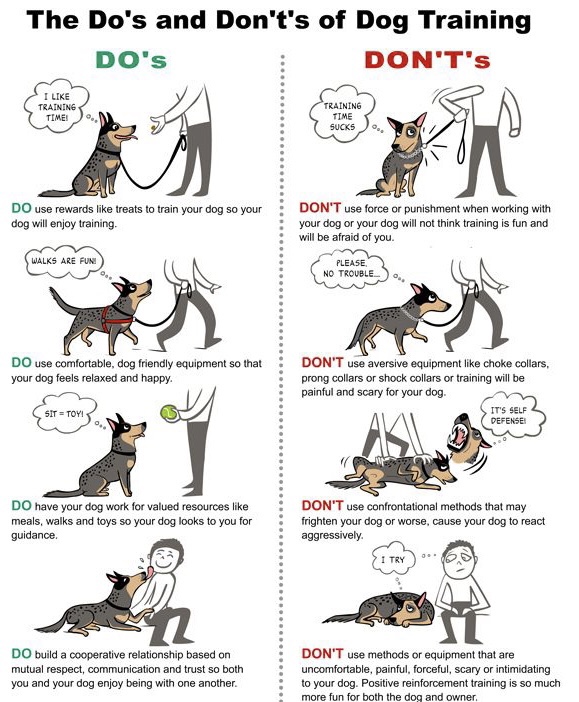
- Praise and reward your dog whenever he listens to you. This helps a lot, since he relates it to having rewards and habits will be created.
- Be methodical. Define a schedule for walks, meals, playtime, and dog training. It is good to stick with the routines so that your puppy gets used to it.
- Don’t be mad at your puppy. Firmness is the key, remember to show love and affection.
If you more about dog training related queries visit my article
bit.ly/trainidogs
where all queries are discussed like best training for dogs, cost and many more.
let me know what you think on the comments and like section.
Marker training is an effective reward-based training system that can be used to train your dog a variety of skills and tasks. Before any dog can start their working dog training they first must be able to understand basic commands.
.
There are 5 core words to be used in marker training and they are:
- “Ready?” (Signals that training is about to begin)
- “Yes” (Positive Marker)
- “No” (Negative Marker)
- “Good” (Duration)
- “Done” (Signals training session end)
I Learn More about the power of marker training > https://bit.ly/2Q8YBes
The silence behind the command is the exclamation
Sometimes people are very inpatient when it comes to their dogs. They want behaviors right away without investing time in building relationships with their dog. I believe that a trusting attitude and a patient attitude go hand in hand. You see, when you let go and learn to trust your dog that he is being great being a dog, it releases stress in your life. Know we just need to focus on being the right human in his or her life. And when you trust your dog in his K9 ability you’re able to be more patient. Patience is not just about waiting for something… it’s about your attitude while waiting to become the trusted partner your dog deserves. And that is to become a patient teacher, so stop being a Tyrant and become a patient Teacher. – Bart de Gols-
Canine Good Citizen Training: Saturdays @ Noon $20
CGC Testing :Last Saturday of Each Month$25
https://www.sciencealert.com/scientists-have-done-some-very-important-work-into-cat-whiskers
——————————————————-
https://www.facebook.com/jeff.hakanson.1/
https://www.facebook.com/groups/CanineConditioning.BodyAwareness/permalink/3572264149554436/
videos/10204416336962526/?extid=0&d=n
The American Kennel Club has extended Virtual Rally through 2021
New sense discovered in dog noses: the ability to detect heat
Dogs’ noses just got a bit more amazing. Not only are they up to 100 million times more sensitive than ours, they can sense weak thermal radiation—the body heat of mammalian prey, a new study reveals. The find helps explain how canines with impaired sight, hearing, or smell can still hunt successfully.
“It’s a fascinating discovery,” says Marc Bekoff, an ethologist, expert on canine sniffing, and professor emeritus at the University of Colorado, Boulder, who was not involved in the study. “[It] provides yet another window into the sensory worlds of dogs’ highly evolved cold noses.”
The ability to sense weak, radiating heat is known in only a handful of animals: black fire beetles, certain snakes, and one species of mammal, the common vampire bat, all of which use it to hunt prey.SIGN UP FOR OUR DAILY NEWSLETTERGet more great content like this delivered right to you!Most mammals have naked, smooth skin on the tips of their noses around the nostrils, an area called the rhinarium. But dogs’ rhinaria are moist, colder than the ambient temperature, and richly endowed with nerves—all of which suggests an ability to detect not just smell, but heat.To test the idea, researchers at Lund University and Eötvös Loránd University trained three pet dogs to choose between a warm (31°C) and an ambient-temperature object, each placed 1.6 meters away. The dogs weren’t able to see or smell the difference between these objects. (Scientists could only detect the difference by touching the surfaces.) After training, the dogs were tested on their skill in double-blind experiments; all three successfully detected the objects emitting weak thermal radiation, the scientists reveal today in Scientific Reports.Next, the researchers scanned the brains of 13 pet dogs of various breeds in a functional magnetic resonance imaging scanner while presenting the pooches with objects emitting neutral or weak thermal radiation. The left somatosensory cortex in dogs’ brains, which delivers inputs from the nose, was more responsive to the warm thermal stimulus than to the neutral one. The scientists identified a cluster of 14 voxels (3D pixels) in this region of the dogs’ left hemispheres, but didn’t find any such clusters in the right, and none in any part of the dogs’ brains in response to the neutral stimulus.Together, the two experiments show that dogs, like vampire bats, can sense weak hot spots and that a specific region of their brains is activated by this infrared radiation, the scientists say. They suspect dogs inherited the ability from their ancestor, the gray wolf, who may use it to sniff out warm bodies during a hunt.“The study is consistent with other research that describes the combined dog nose and brain as a sophisticated platform for processing a broad range of signals,” says Gary Settles, an emeritus professor of mechanical engineering at Pennsylvania State University, University Park, who has studied dogs’ sniffing abilities. He doubts, however, “that the dog rhinarium can distinguish patterns of hot and cold objects at a distance,” suggesting dogs’ thermal detection skills may not be useful for long distance hunting. “[T]hat needs further study.”If nothing else, the work suggests the extraordinary skills of the sled dog Buck, who tracked prey “not by sight or sound or smell, but by some other and subtler sense” in Jack London’s Call of the Wild, aren’t completely fictional after all. Posted in: Plants & Animalsdoi:10.1126/science.abb4952
Malinois training session :…..
https://www.facebook.com/100043317768582/posts/400238594763396/?extid=0&d=n
https://www.facebook.com/100008656239920/posts/2538243803140803/?extid=0&d=n
United Schutzhund Club of America
Schutzhund is a German word meaning “protection dog.” It refers to a sport that focuses on developing and evaluating those traits in dogs that make them more useful and happier companions to their owners. Schutzhund work concentrates on three parts. Many are familiar with the obedience work of the American Kennel Club’s affiliates and will recognize the first two parts, tracking and obedience. The Schutzhund standards for the third part, protection work, are similar to those for dogs in police work. Called IGP then IPO check back for current name
Tracking …. obedience… and Protection
———//////———-////////————////////———-
A GUIDE TO DOG SPORTS with HUMOR….
Add Cute Circus Tricks and dad you have a family dog
Author: Ruby Welsford of Ruby, Betsy and Milo too
Search and rescue – when you want to be really poor…and muddy!
Rally – dogs and signs and dancing
Tracking – you walk around over there, and then go get your dog and walk around over there and he finds your keys
Weight pull –
a. People think you do it to wind up the furmoms online. Little do they all know in all other parts of your dogs life, you are one.
b. Looks exciting, actually a bunch of sitting around doing math.
Fast cat – people training the long recall. 😆😆😆
Lure coursing – for people who can’t run and don’t have time to train a more labour intensive sport 🤣 just sit back and watch the dog do all the work!
Trick dog-
a. when you really want to pretend that your show dog actually does stuff other than sit in a kennel and prance around a ring
b. You have an over trained collie type that will throw a strop if any other dog but her, is in the arena as its ALL ABOUT THEM AND EVERYONE SHOULD WORSHIP THEIR DIVANESS, take 3 adults to be carried OUT the ring to STOP showing off their MUCHLY SUPERIOR INTELLECTS but when you put the video online you get people accusing you of treating your spoilt canine that gets treated like royalty like a tormented circus animal…
Earthdog – people standing around nodding at each other while somewhere in the distance, a dog is screaming.
Hoopers – fat dog Agility that’s why the tunnels wider/legs too short to jump 😂😂
Agility – for people with dogs fitter them them
Conformation Showing – for billionaires that want to become millionaires
Flyball – demand barking as a sport
Gundog – dead thing fetch
Working Trials – for those that didn’t get into police academy or old athletes with young dogs
IPO – They spell k9 with a numeral calligraphy written by dog
Disc – the opposite of what you teach in obedience
Obedience- for when you really enjoyed marching drill
HTM – people walking with their dogs in fancy lines to music
Freestyle – socially acceptable adult dressing up with dogs doing cute tricks
Bikejouring – fancy doggo scootering
Canicross – marathon runners who realise no dogs allowed
Dock diving – essentially a doggy belly flop competition
Mondioring- so hardcore you don’t even spell things k9 any more and surprize attack is normal
Sheepdog trials – people with collies that never played Joseph in the school nativity play
Barn hunt- you only enter for the hilarity of watching your great dane squeeze through tunnels meant for jack russells.
Scentwork – spaniel owners who watch too much 24
Lure coursing/terrier racing – no I promise the lunging and screaming dog is NOT being abused
Parkour – Imagine Tony Hawk as a dog
Once again inspired by Aimee Gardner when asked by a client what rally is responded with the very descriptive answer “it has like signs”
Disclaimer: The above is for people that actually have a sense of humour. If you are offended by this, this probably not the page for you 🤣🤣
#DTHPam’s Fun with Fido Dog Training, Blog at WordPress.com.
The Crook County 4-Henrollment deadline is 5:00 pm, February 1, 2021. This enrollment window is critical for youth wishing to fully participate in the 2021 Crook County Fair season.
Youth are welcome to enroll after February 1st however they will not be eligible to participate in the 2021 Crook County Fair season. Youth who enrollment after February 1, 2021 will be permitted to participate in other 4-Heducational events and activities (e.g. club meetings, club activities, pre-fair contests, camps, conferences, etc.). However, they will not be eligible to participate in confirmation, showmanship, livestock auction, static building exhibits, or for high point or premiums.
Members, Parents/Guardians – In order to facilitate the enrollment process, please follow these steps in completing the enrollment packet.
- Member Enrollment Form,
- Youth Code of Conduct (must be signed by member and parent/guardian),
- Official Health Form (must be signed by parent/guardian),
- Acknowledgement of Risk and Waiver of Liability (must be signed by parent/guardian), and
- Fee: $35 for first two youth, $10 per additional youth. Checks payable to: OSU Crook County Extension.
All forms in the packet must be complete. The packet must be accompanied by any and all fees. We will not be able to accept incomplete packets.
Enrollment materials
Who can join 4-H in Crook County?
All youth ages 5 to 19 are welcome to join and learn with 4-H. 4‑H clubs follow planned, self-directed programs in a number of project areas, including animal science, STEM, communication, cooking, art, gardening, and environmental science. Clubs may meet in a variety of locations and typically meet in the evenings and on the weekends.Photo: Karissa Dishon (Cropped from original)
 Pam’s Fun with Fido ......Dog Training